


Think $100 isn’t enough to start investing? Think again. With today’s digital tools and financial platforms, even a small amount can become your first step toward financial freedom. This guide will show you exactly how to start investing with just $100—safely, smartly, and with a long-term mindset.
Why Start with $100?
Investing early—even with a small amount—gives your money time to grow. Thanks to compound interest and the power of consistent investing, even $100 can make a difference over time.
Here’s a simple example:
- Invest $100 at 7% annually
- Add $50/month for 10 years
- Final Value: ~$8,500
Not bad for a small start, right?
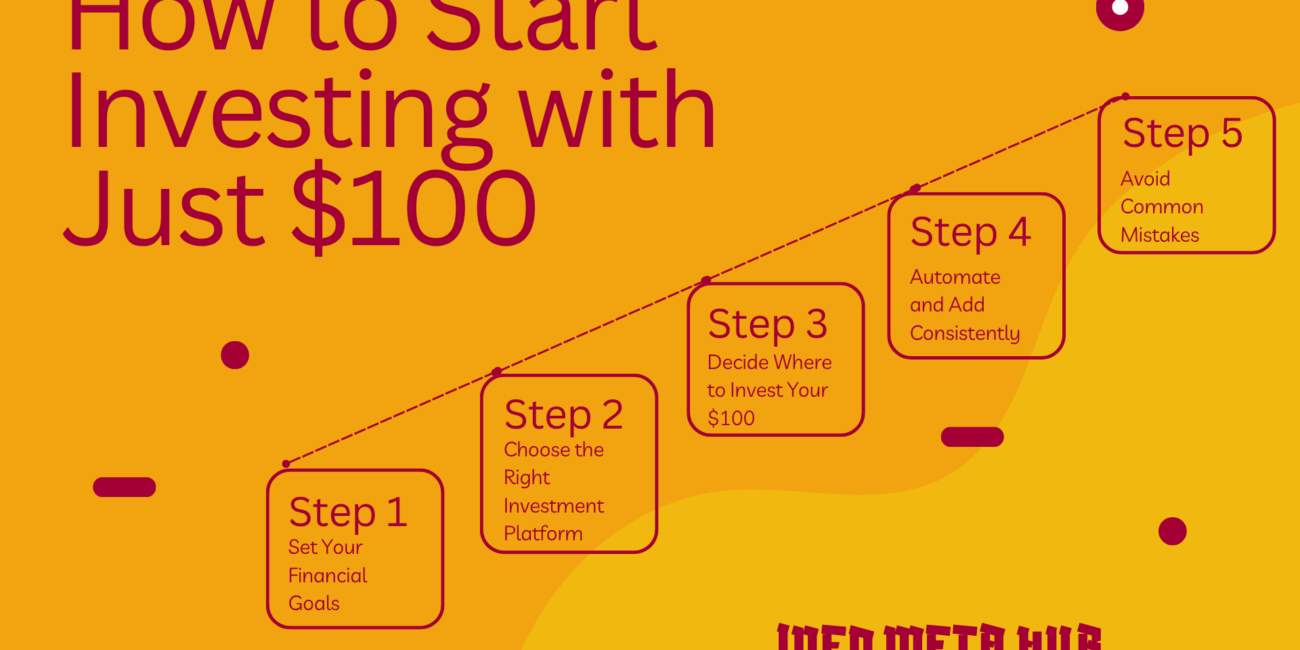
Step 1: Set Your Financial Goals
Before investing, ask yourself:
- What am I investing for? (e.g., retirement, a home, financial security)
- What is my risk tolerance?
- When do I need the money?
Knowing your goals will help you choose the right type of investments.
Step 2: Choose the Right Investment Platform
With just $100, you’ll want a platform that:
- Allows low or no minimum investments
- Charges minimal fees
- Offers fractional shares or ETFs
- Is beginner-friendly
Top platforms to consider (in the U.S. and internationally):
- Robinhood
- Fidelity
- EToro
- Webull
- Revolut (Europe)
- Interactive Brokers
Step 3: Decide Where to Invest Your $100
1. Exchange-Traded Funds (ETFs)
ETFs let you invest in a wide range of assets in one fund. They are diversified, low-cost, and ideal for beginners.
Examples:
- S&P 500 ETFs (e.g., VOO, SPY)
- Total market ETFs (e.g., VTI)
2. Fractional Shares
You don’t need to buy a whole share of Amazon or Tesla. Many platforms let you buy a small portion of a stock for as little as $1.
3. High-Yield Savings + Robo-Advisors
If you want a hands-off approach, robo-advisors like Betterment or Wealthfront invest your $100 into diversified portfolios automatically.
Step 4: Automate and Add Consistently
$100 is a great start—but consistent investing is the real key.
- Set up automatic deposits (e.g., $25/week)
- Reinvest any dividends
- Review your portfolio every 3–6 months
Over time, this builds serious momentum—even if you start small.
Step 5: Avoid Common Mistakes
- Don’t try to “time the market”
- Don’t put all your money into one stock
- Don’t invest money you can’t afford to lose
Investing is a long game. Be patient, stay informed, and keep learning.
Final Thoughts
You don’t need thousands to start investing. You just need a plan—and the discipline to stick to it. With just $100, you can begin building a future of financial stability, independence, and opportunity.
Start now. Let compound growth do the rest.